Ceramic Foam Filter
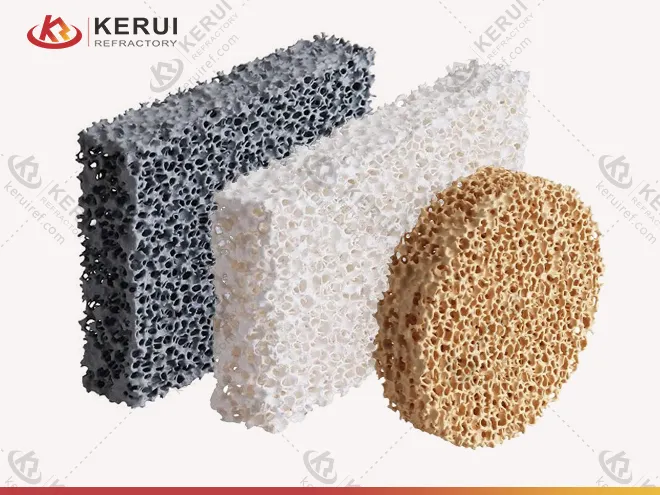
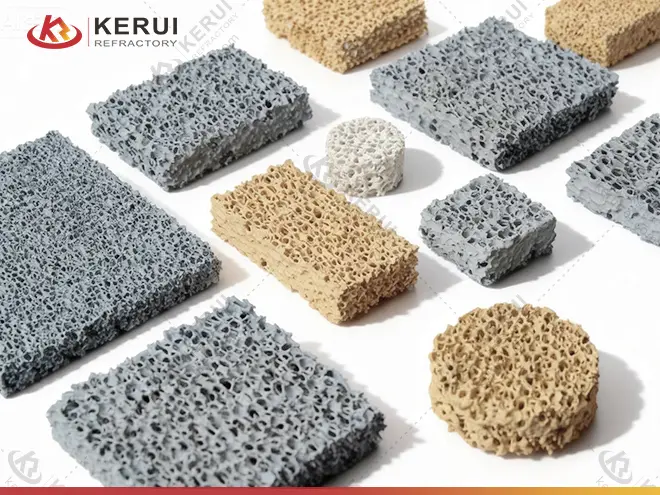
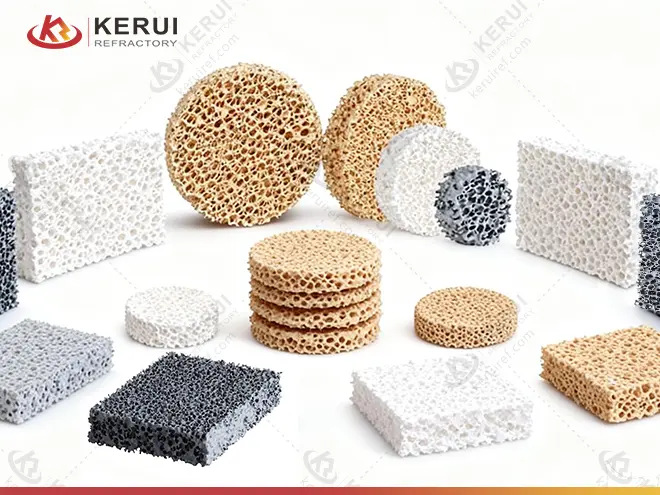
KERUI foam ceramic filter has the characteristics of complete specification (size:30-600mm, pore:10 -70PPI), precise size, goodstrength,large specific surface area, high porosity, 90od thermal shock resistance, high temperature stabilty in molten metal,etc. Ithas a g0od adsorption effect even on the smallimpurities of 1-10um,which is not only well used for high temperature molten liquid,but also gas dust purification, sound insulation, catalyst carrier substrate, and so on.
Description of Ceramic Foam Filter
Ceramic foam filter sheets are a novel type of refractory filter material with a three-dimensional mesh-like open-pore structure, typically made of high-purity ceramic materials such as alumina, silicon carbide, and zirconium oxide. Their internal structure is a uniformly interconnected foam-like pore structure with a stable pore size distribution, enabling effective filtration of non-metallic inclusions in molten metal under high-temperature conditions, improving melt cleanliness and casting quality.
During use, as molten metal passes through the porous structure of the ceramic foam filter sheet, inclusions are intercepted, adsorbed, or have their flow patterns altered, depositing on the pore walls. Simultaneously, the flow of the molten metal tends to be smoother, significantly reducing turbulence, porosity, and inclusion defects.
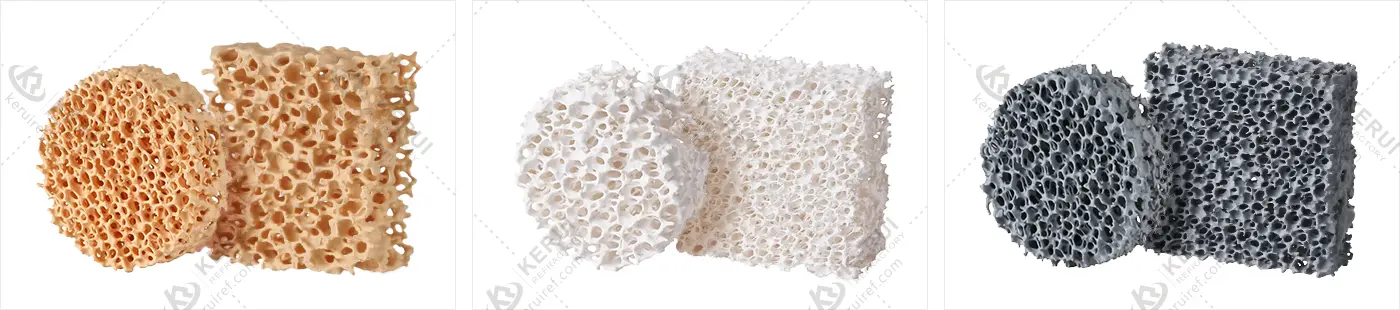
Technique Data of Ceramic Foam Filter
| Στοιχείο | Silicon Carbide Ceramic Foam Filter | Alumina Ceramic Foam Filter | Zirconia Ceramic Foam Filter |
|---|---|---|---|
| Χρώμα | Grey / Black | Λευκό | Yellow |
| Pore Density (PPI) | 10–40 PPI | 10–70 PPI | 10–40 PPI |
| Porosity | 80%–90% | 80%–90% | 80%–90% |
| Max Working Temperature (°C) | ≤ 1500 | ≤ 1100 | ≤ 1700 |
| Bending Strength (MPa) | ≥ 1.0 | ≥ 0.8 | ≥ 1.2 |
| Αντοχή σε θερμικό σοκ | 6 | 6 | 6 |
| (times / 1100°C) | |||
| Application Fields | Grey iron, ductile iron, copper, brass, and non-ferrous alloy casting | Aluminum and aluminum alloy casting | Carbon steel, stainless steel, and large cast iron |
Advantages of Ceramic Foam Filter
Excellent Filtration Performance
Its three-dimensional interconnected pore structure efficiently removes oxide inclusions, slag, and non-metallic impurities from molten metal.
High Temperature Resistance and Excellent Thermal Shock Resistance
It can operate stably for extended periods in high-temperature molten metal environments, exhibiting strong resistance to rapid heating and cooling, and is not prone to cracking or spalling.
Strong Chemical Stability
It has low reactivity with various molten metals, does not contaminate metal components, and is suitable for aluminum alloys, copper alloys, steel, etc.
Improved Molten Metal Flow Pattern
Effectively reduces turbulence, promotes laminar flow filling, and reduces casting defects such as porosity, inclusions, and shrinkage.
Uniform Structure and Good Permeability
Consistent pore size and low resistance ensure stable metal flow while maintaining filtration effectiveness.
Increased Yield and Reduced Costs
Reduces scrap rate and subsequent processing and repair costs, improving overall production efficiency.
Application of Ceramic Foam Filter
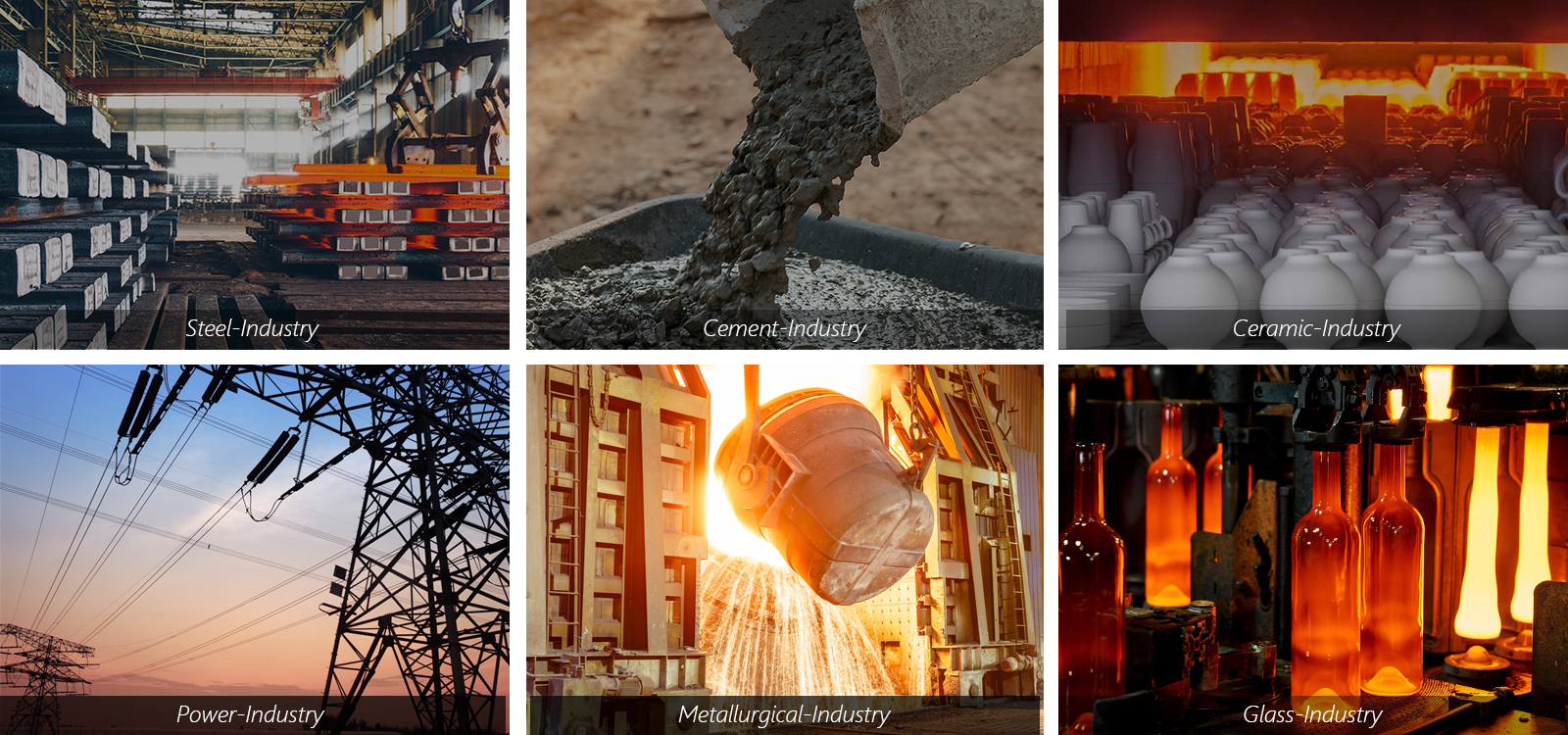
- Aluminum and Aluminum Alloy Casting: Widely used in aluminum alloy casting, die casting, gravity casting, and low-pressure casting to improve the surface quality and internal density of castings.
- Copper and Copper Alloy Casting: Used to filter oxides and inclusions from molten copper, improving electrical conductivity, thermal conductivity, and mechanical properties.
- Steel and Stainless Steel Casting: Used in some precision castings and special steel grades to improve the purity of molten steel.
- Automotive and Aerospace Castings: Suitable for engine parts, structural components, etc., with high quality requirements.
- Precision Casting and High-End Equipment Manufacturing: Used in casting processes requiring high cleanliness and consistency.
 English
  العربية
  简体中文
简体中文  Русский
  Français
  Deutsch
  Ελληνικά
  Italiano
  日本語
日本語  한국어
한국어  Bahasa Indonesia
  Português
  Español
  Türkçe