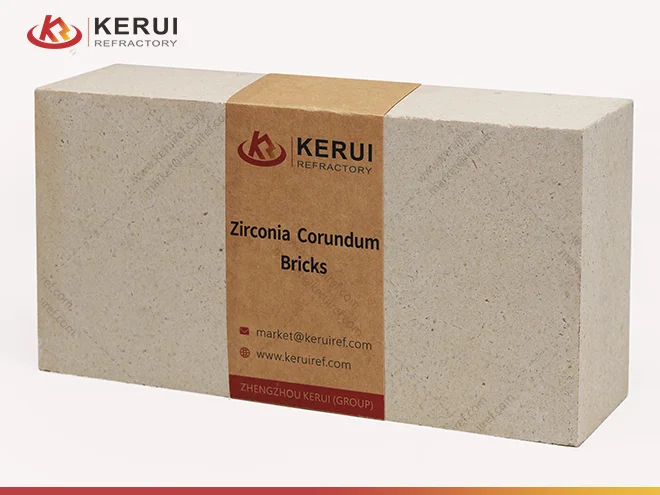
그리고 내화 벽돌 commonly used in Steam Reformers are primarily alumina-silicon based materials, with key requirements being low iron content, resistance to reduction, and long-term high-temperature stability.
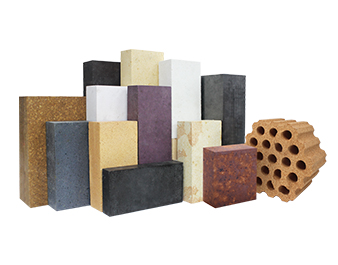
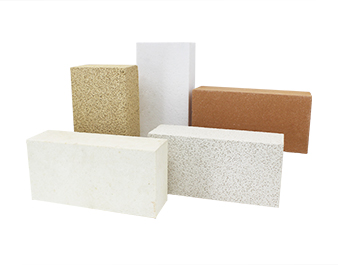
1️⃣ High-alumina refractory bricks (Al₂O₃ 60–80%): The most widely used type, applied to the radiant furnace walls, furnace bottom, and burner perimeter. Requires low iron and low alkali content, the ability to withstand hydrogen-rich reducing atmospheres, and good strength and wear resistance.

2️⃣ Mullite bricks (Al₂O₃ 65–72%): Low thermal expansion and excellent thermal shock resistance, suitable for critical areas such as the hot face of the furnace walls, the Burner zone, and the Upper/Lower Terrace. Offers a longer service life than ordinary high-alumina bricks.
3️⃣ Corundum bricks (Al₂O₃ ≥90%): Used in areas with extremely high local temperatures and flame erosion, such as near the Burner nozzle. High temperature resistance and strong corrosion resistance, but expensive and generally used in localized areas.
4️⃣ Low-iron clay bricks (Al₂O₃ 40–50%): Mostly used in convection sections or indirect flame zones; not recommended for high-temperature areas in radiant sections.
5️⃣ Shaped refractory bricks (Burner Tile, Terrace Tile, etc.): Mostly made of high-alumina or mullite, custom-made according to drawings; a standard configuration for Steam Reformers.
 English
  العربية
  简体中文
简体中文  Русский
  Français
  Deutsch
  Ελληνικά
  Italiano
  日本語
日本語  한국어
한국어  Bahasa Indonesia
  Português
  Español
  Türkçe